Carpet Cleaners in Streatham

We provide carpet cleaners in Streatham for homes and workplaces that need a careful, practical clean rather than a rushed surface treatment. Our main service focuses on restoring the look and feel of fitted carpet, removing everyday soil from fibres, and helping rooms feel fresher underfoot. Different carpets need different methods, so the work is planned around the fibre type, the construction of the carpet and the level of soiling already present.
The service suits routine maintenance as well as more targeted cleaning after spillages, heavy footfall or a general build-up of dust and debris. We work with a straightforward approach that keeps the process clear for customers: identify the areas that need attention, choose the most suitable cleaning method, and complete the work with care for the carpet and the surrounding room. Good carpet cleaning is as much about judgement as machinery, especially when a property has mixed flooring, delicate materials or rooms that need to stay in use.
If you are comparing options, start by thinking about the carpet itself. A sturdy synthetic carpet in a busy hallway may respond well to a deeper restorative clean, while a lighter pile in a bedroom may need a gentler finish that protects texture and colour. We can also help with related textile surfaces where appropriate, and we keep the scope of each job focused on the surfaces that genuinely need work. Tell us what needs cleaning and what result you want; that gives us the best basis for a sensible quotation.
How our carpet cleaning work is planned
Every carpet has its own condition, and that is why the first step is not simply to clean everything in the same way. High-use areas often gather compacted dirt in the pile, while lower-traffic rooms may mainly need dust and light marks lifted away. Our approach is built around that difference. We consider visible staining, pile direction, fibre sensitivity and access around the room so the cleaning method supports the carpet instead of overworking it.
For many customers, the most useful result is a carpet that looks noticeably brighter without appearing damp, overloaded with product or sticky afterwards. The cleaning process therefore aims to remove soil rather than mask it. That means careful product choice, controlled application and a finish that respects the carpet’s structure. Where suitable, we can treat a whole room, a set of stairs, or a focused section that needs more attention than the rest of the floor.
What a careful clean can address
A well-managed carpet clean can improve the appearance of everyday marks, reduce the dulling effect of general dirt, and refresh fibres that have become flat through regular use. It is also useful when a carpet has collected dust in corners, along skirting lines or in areas where furniture has been moved. For households that value a tidy finish, the difference often comes from the detail rather than the drama: even cleaning, sensible drying, and attention to edges and transitions.
Carpet cleaning for different room types
Room layout affects how the work is carried out. Hallways, stairs and landings usually receive more concentrated wear than spare rooms, so they may need a more deliberate cleaning pass. Living rooms often involve larger areas of carpet, pieces of furniture to work around, and a mix of foot traffic and spill risk. Bedrooms may have lighter soiling but still benefit from a refresh that removes trapped dust and keeps the room feeling maintained.
We also take into account practical limits. Some carpets have been fitted with a particular finish or texture that should not be saturated, while others can be treated more robustly because their construction allows it. That is why one room may need a deeper treatment and another may need a more restrained surface clean. The aim is always to match the method to the material, rather than forcing one standard process onto every floor covering.
Where customers have several carpeted spaces, it is often sensible to prioritise the areas that affect daily use most strongly. This may include the main entrance route, the family room, or the bedroom most in need of a reset. Targeting the right rooms first helps keep the overall job practical and cost-conscious, especially when the property has a mix of older and newer carpet sections.
Stains, marks and everyday carpet issues
Not every mark on a carpet behaves in the same way. Some stains sit on the surface and respond well to controlled treatment, while others work deeper into the pile and need patience rather than force. General dirt, food drips, drink marks and tracked-in soil are among the most common issues we see in carpeted spaces. The cleaner the original fibres are, the better the overall finish tends to be after treatment.
Stain removal work begins with identifying what has caused the mark, because different residues respond to different approaches. A greasy mark, for example, is not handled in the same way as a water-based spill. That kind of judgement matters because using the wrong product can sometimes set a stain further or disturb the fibre. We therefore treat stain work as a careful process, not a promise that every mark will vanish completely.
For customers, the most useful preparation is simply to point out the problem areas and say whether anything has already been applied to them. That saves time and helps avoid overlapping products. If a carpet has both general soiling and a few specific marks, the cleaning plan can be adjusted to address both in a sensible order. Accuracy at the start usually gives the best chance of a tidy result.
Additional textile surfaces and related cleaning

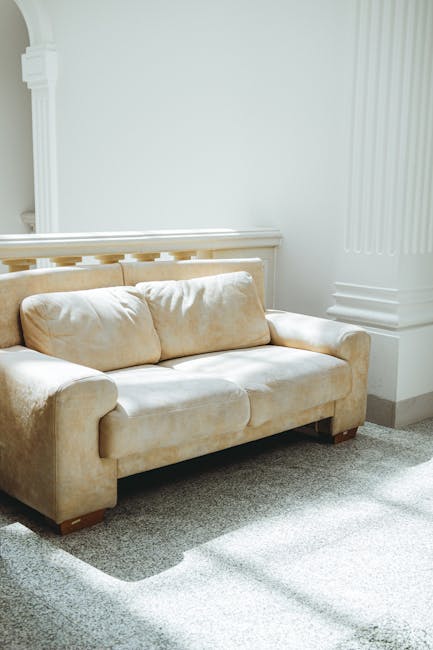
Although carpets are the main focus, many properties also need attention on connected soft furnishings. Rugs, upholstery and sofas can collect dust, body oils and accidental marks in much the same way as flooring, although the materials and cleaning limits may differ. Where a room contains several fabric surfaces, it often makes sense to treat them as part of one planned clean so the overall finish feels consistent rather than piecemeal.
We work on the principle that each textile item should be assessed individually. A fitted carpet can often tolerate a different process from a wool rug or upholstered armchair, and what works on one surface may be too strong for another. The practical value of this approach is that the customer receives a cleaner result while the materials are treated with the right level of care. It also helps avoid unnecessary wear caused by using a one-size-fits-all method.
If your carpet cleaning request also involves an area rug or a sofa, it can help to mention that from the outset so the cleaning plan reflects the full set of items. That way the work can be organised with the right tools and sequence in mind, and the room can be left with a more balanced appearance. A combined clean is not always required, but it can be useful when several surfaces share the same level of use.
What to expect from a quotation
Carpet cleaning quotations are usually shaped by the size of the area, the condition of the carpet and the kind of cleaning requested. A single room with light maintenance needs is not the same as a larger property with heavy wear, several stain areas or a mixture of carpet types. The quote should reflect the real amount of work involved rather than relying on a general guess, which is why accurate information matters.
To prepare a useful quote, it helps to know the number of rooms, whether stairs are included, the approximate condition of the pile and whether there are specific stains or odours to address. If the carpet has especially delicate fibres, that is relevant too. A clear description means the quotation can be based on the likely work involved, not on vague assumptions. Short notes are often enough, and photographs can help where the condition is uneven or there are several affected areas.
Simple details that improve the estimate
- Which rooms or carpeted areas need cleaning
- Whether the carpet has visible stains, traffic lanes or pet-related marks
- Any delicate fibres, fitted stairs or awkward access points
- Whether rugs or upholstery should be included as well
Carpet care choices for households and businesses
Carpet cleaning can support very different types of property. In homes, the aim may be to refresh a lounge, hallway or bedroom and keep the soft flooring feeling comfortable and presentable. In offices and other workspaces, the focus is often on controlling the appearance of worn routes, entry areas and shared spaces where dirt gathers quickly. In both cases, the work is shaped by use, not by a fixed schedule.
Some customers want a light restorative clean, while others need a more intensive treatment because the carpet has not been cleaned for a longer period. It is useful to decide how much improvement is needed and whether the carpet is being prepared for visitors, everyday use or a change of occupancy. That practical goal influences the method, the depth of treatment and the time required for the job.
The same carpet can also respond differently depending on room temperature, ventilation and the amount of moisture the fibres can comfortably handle. For that reason, the approach should always be balanced. The cleaner the decision-making, the better the result is likely to be. If you want to arrange carpet cleaning in Streatham, the next step is simple: ask for a quotation and describe the areas that matter most.
About Streatham
Streatham is a district in south London within the London Borough of Lambeth, stretching along the A23 between Brixton and Norbury. The area developed as a linear settlement with a long high road, and its history is reflected in a mixture of older terraces, interwar housing and more recent apartment buildings. Streatham Common is one of its best-known open spaces, offering grassland, tree cover and wide views, while the adjoining Rookery gardens provide a more formal and carefully planted setting. Streatham is also known for the long, broad sweep of Streatham High Road, one of the main commercial corridors in south London, where everyday shops, services and transport links sit alongside civic buildings and older street patterns. The district grew significantly in the Victorian and Edwardian periods as transport improved, and traces of that expansion remain in the housing stock and street layout. The name is often associated with leisure and local culture as well as shopping, and the area has a varied urban character rather than a single architectural style. Its position on a major route has made it a connected part of south London for many years, while the commons and side streets provide a quieter contrast to the main road. This blend of open space, transport access and historic development gives Streatham a distinct identity within the wider borough.
End of tenancy and one-off carpet cleaning
Some of the most common requests involve a one-off clean rather than an ongoing maintenance plan. This may be part of moving out of a property, preparing a room for new use, or simply dealing with carpet that has reached a point where routine vacuuming is no longer enough. End-of-tenancy cleaning often requires a more thorough finish because the carpet needs to present well after a period of occupancy.
One-off carpet cleaning is also useful when life has left a room looking patchy or tired and the customer wants a broader reset. That can include hallways that have gathered tracked-in dirt, sitting rooms with more visible traffic lines, or bedrooms that have not had a deeper clean for some time. The result should be a more even appearance across the pile and a more comfortable feel underfoot, without unnecessary treatment of areas that are already in reasonable condition.
Where time is limited, the best plan is usually to focus on the areas that carry the most visual weight: entrance routes, stairs, living spaces and the rooms people see first. This gives the clean a stronger overall effect. If the job also involves related textile items or other domestic cleaning tasks, it can be helpful to group them into a single, orderly request so the work is quoted and carried out more efficiently.
Cleaning methods and material care
The right method depends on the carpet’s fibre, construction and condition. Synthetic fibres, wool blends and more delicate natural materials can each respond differently to cleaning products and moisture levels. A careful cleaner will adapt the work rather than treating all carpets as interchangeable. That protects the finish of the carpet and helps avoid problems such as distortion, residue build-up or a result that looks clean at first but does not hold up well.
Method also matters when a carpet has been treated before. Pre-existing cleaning products, repeated spot treatments or household stain removers can alter how the fibres behave. In those situations, a conservative approach is often safer than an aggressive one. The aim is to improve the carpet’s appearance while keeping the structure stable. A good result usually comes from balance: enough cleaning to make a visible difference, but not so much that the material is stressed.
If you are deciding whether a room needs deep cleaning or lighter maintenance, think about the carpet’s age, the type of use it receives and whether the pile has already lost its shape. A worn traffic lane may need more than a surface freshen-up, while a relatively new carpet might only need targeted attention. Matching the clean to the condition keeps the work sensible and avoids unnecessary intervention.
Why customers often request carpet cleaning

People usually arrange carpet cleaning for practical reasons rather than decorative ones. A floor covering can start to look dull, hold onto odours, or show the effects of repeated everyday use long before it reaches the point of replacement. Cleaning is a way to improve what is already in place, keep a room more presentable and extend the useful life of a carpet that is otherwise still serviceable.
Carpets also affect the feel of a room. Even when the rest of the space is tidy, a marked or tired carpet can make the whole room seem less cared for. A well-executed clean helps restore a more even appearance across the floor, especially where sunlight, foot traffic and furniture placement have left uneven wear. This is one reason the service remains useful in both homes and workplaces.
If you would like to move ahead, the simplest next step is to request a quotation and describe the carpeted areas you want cleaned. Contact us with the room count, any problem marks and the type of carpet if you know it, and we can turn that into a practical estimate. If you are still comparing options, a brief enquiry is enough to start the conversation.
Further information on service options
Customers sometimes want to understand how carpet cleaning sits alongside other services. In a property where several surfaces need attention, it can be sensible to combine carpet work with upholstery care, rug cleaning or general interior cleaning, as long as each task is described clearly. The benefit is mainly organisational: the visit or quotation can reflect the real mix of work, and each surface can receive the treatment that suits it best.
There are also times when carpet cleaning is the right standalone choice. If the rest of a room is already in good order, it may not be necessary to expand the request. A focused clean can be the most practical option when the carpet is the part that looks most tired or feels least fresh. That keeps the job direct and avoids adding services that do not support the main aim.
For customers who want to compare details, our pricing and quotes page is a useful place to begin, and the broader carpet cleaning page explains the service in more depth. If you need a general overview of related work across the property, the cleaning company page can also help you see how the different options fit together.